Home › Services
Pool removal in Katy and west Houston, from cracked gunite to a usable yard
A backyard pool that nobody swims in still costs money every month. It needs chemicals, a pump that runs, a cover or a fence, and repairs to plaster, tile and coping that Gulf Coast clay keeps pushing out of line. Plenty of owners in Katy, Cypress and Sugar Land reach the point where the pool is a liability instead of a feature. Removing one is a real earthwork job: the water has to go somewhere legal, the shell has to be broken or hauled out, the hole has to be filled so it will not sink, and the city may want to see it. This page walks through how that work is done and what to decide before anyone shows up with a machine.
Why so many Katy-area owners are filling in their pools
A large share of subdivision lots on the west side of the Houston area came with an in-ground pool, and many of those pools are now old enough to need major work. Replastering, a new tile line, a cracked deck and a tired pump can add up to a bill that rivals the value the pool adds to the house. At that point the honest comparison is between rebuilding the pool and getting rid of it.
Other reasons come up just as often. A family wants the yard back for kids, dogs or a garden. A dry summer let the clay shrink away from the shell and it cracked. A flood left the pool full of silt. Or a buyer wants it gone before closing. Each reason points toward a slightly different method, so the first conversation should be about what the yard needs to become.
The pool types a contractor runs into here
How the pool was built changes how it comes out, how much material leaves the site, and how long the work takes.
- Gunite or shotcrete: sprayed concrete over a steel cage, finished with plaster or pebble. The most common in-ground type in the area and the heaviest to break.
- Fiberglass: a single molded shell set in a hole. It can sometimes be cut into sections and lifted out, with far less concrete to break.
- Vinyl liner: a liner hung inside steel, polymer or concrete panel walls. The liner and walls come out fairly easily, though bracing and a concrete collar add work.
- Above-ground: a frame, wall and liner on a leveled pad, usually taken apart by hand, leaving a sand base and a dead circle of lawn to deal with.
- Attached spas: often built into the same shell with a shared wall, so the spa usually comes out at the same time.
Partial removal versus full removal: the decision that drives everything
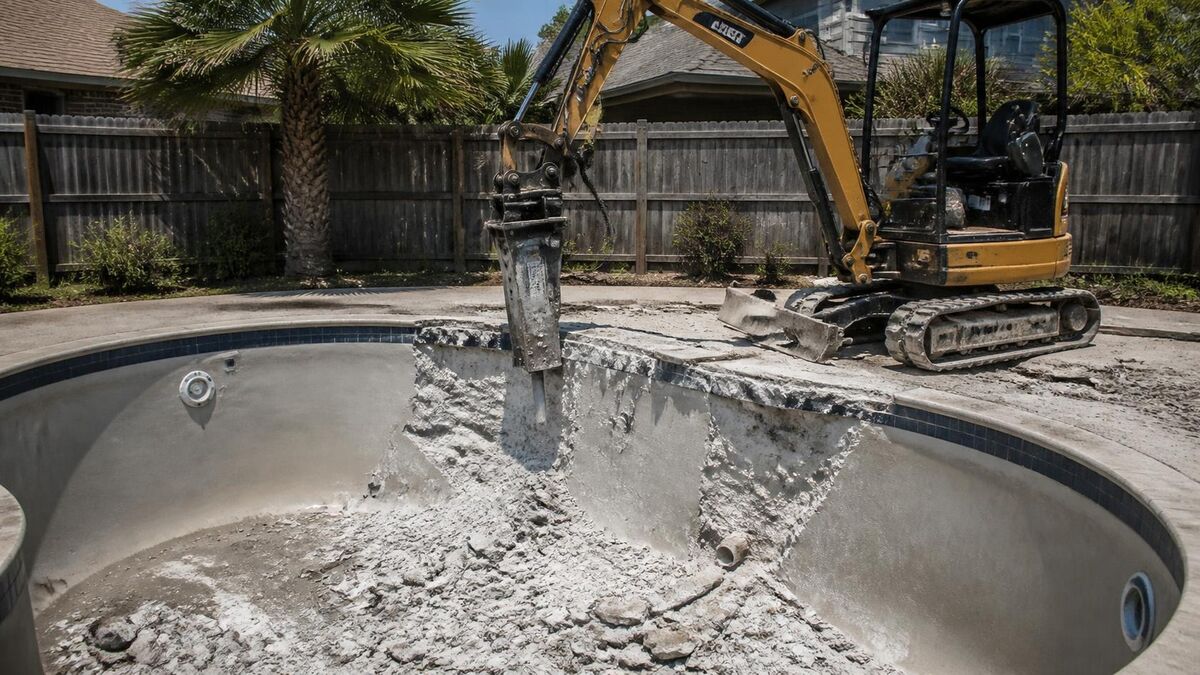
Partial removal, sometimes called a fill-in or abandonment, means the top portion of the shell is broken off and dropped into the hole, the floor is punched through so water drains down instead of collecting, and the cavity is filled with soil and compacted. The bottom of the old pool stays buried. It is quicker, moves less material off the lot, and can be reasonable for a yard that will only ever be lawn or garden.
With full removal, every piece of the shell gets broken apart and trucked off, the pit is dug down until only undisturbed earth shows, and engineered fill goes back in one compacted layer at a time. No trace of the old pool is left in the ground. It takes longer and involves more trucking, but it leaves ground that behaves like the rest of the yard.
The gap matters most when you sell or build. Some buyers walk away from an abandoned shell under the lawn, and some builders will not put a slab or an addition over one without knowing exactly what is down there. Full removal takes that question off the table.
Draining the pool without breaking local rules
Every removal starts by emptying the water, and this is where people get into trouble without meaning to. Pool water usually carries chlorine, salt or other chemicals, and cities and drainage districts around Houston have rules about where it can go. Often that means letting the chlorine dissipate and pumping to the sanitary sewer cleanout rather than the street gutter, which feeds storm drains and eventually the bayous. The contractor should check what your city or utility district expects.
Wet ground adds a second risk. After a long rainy stretch, groundwater pressing on an empty shell can push it upward or crack it. On the flat, slow-draining ground around Katy and Cypress, contractors watch recent rain and keep the gap between draining and breaking short. If your yard holds water for days after a thunderstorm, mention it.
How the work usually unfolds on site
Most jobs follow a recognizable order, which helps you plan around the noise, the trucks and the days the backyard is off limits.
- Walk-through: pool type, deck, equipment pad, fences, gates and the route a machine will take from the street.
- Utilities: power to the pump and lights shut off and made safe, and gas to any heater shut off and capped.
- Draining, following local discharge rules.
- Access: a fence panel may come down, with mats or plywood spreading equipment weight over lawn and driveway.
- Deck and coping broken out and hauled, or kept as fill depending on the method.
- Shell broken with a mini excavator or skid steer carrying a hydraulic breaker, or a fiberglass shell cut and lifted.
- Floor punched through for a partial removal, or broken and hauled for a full one.
- Fill spread in layers, each compacted before the next goes down.
- Final grade shaped so rain runs away from the house, then topsoil for sod or seed.
Fill, compaction and why a filled pool can sink later
The fill is the part you live with for decades, and it is the easiest part to do cheaply and badly. Loose dirt dumped in all at once settles for years: a low spot appears, water ponds in it after every storm, and anything built on top cracks or tilts. On the shrink-swell clay common across Fort Bend and Harris County, poorly placed fill can also move differently than the native ground beside it.
Good practice is to place fill in thin layers and compact each one with a plate compactor, a roller or the machine itself. For a full removal, especially where a structure may go later, the fill should be chosen for stability rather than price, and a soils firm can test the compaction. Ask whether testing is offered. Some minor settling in the first season is normal and easily topped up; a sunken bowl in the middle of the yard is not.
The deck, the equipment pad and the plumbing runs
The surrounding deck is often a wide apron of concrete, cracked and heaved by the clay underneath. Most owners have it removed with the pool so the whole area can be regraded. If you want to keep part of a patio near the back door, say so early so the contractor can saw a clean line. Walks or slabs elsewhere on the property are covered on the concrete removal page.
The equipment pad holds the pump, filter, heater and sometimes a salt cell or automation panel. That gear is disconnected and scrapped or set aside if you plan to sell it. Supply and return lines are cut and capped, and an electrician ends the circuit at the panel so no live wiring stays buried in the yard. Ask that each item be listed in the proposal.
Permits, inspections and telling a future buyer
Whether you need a permit depends on where the house sits. Inside a city, the building department often has a process for pool demolition or fill-in, and some want to inspect the drainage holes or the compacted fill before it is covered. In unincorporated parts of Harris, Fort Bend and Waller counties, the county, the utility district or the homeowner association may each have expectations. The contractor should pull whatever is required.
Keep the paperwork. Seller disclosure forms generally ask about known conditions, and a buyer's inspector may spot a filled pool with a probe or an aerial photo. A permit record, photos of the work and a written note saying partial or full answer the question cleanly.
What you can build where the pool used to be
After a partial removal, assume the spot suits lawn, a garden bed or light landscaping. A slab, an addition or a garage over a buried shell invites cracking, and a builder may require the shell to come out first.
After a full removal with tested, compacted engineered fill, the spot can usually be treated like other ground on the lot, subject to what a structural engineer or the building department says for the specific structure. If an outdoor kitchen or workshop is even a maybe, full removal is generally the better spend, since digging out a buried shell later costs more.
What a solid pool removal proposal should list
Proposals for the same pool can look wildly different because they describe different jobs. Make sure each one answers these points in writing.
- Partial or full removal, and what remains in the ground afterward.
- How and where the water will be drained.
- Whether the deck, coping, equipment pad and any spa are included.
- How electrical, gas and plumbing lines will be ended and by whom.
- Fill type, placement, compaction and whether testing is offered.
- Which fence sections come down and who restores lawn and driveway.
- Permits, inspections, final grade, topsoil and sod or seed.
- Debris handling: broken concrete hauled for crushing and recycling, steel and equipment sent to scrap, the rest to a landfill or transfer station.
Cost drivers and how to get the job priced
No honest contractor prices a pool removal over the phone. The number depends on size and construction, partial versus full removal, how much deck surrounds it, whether the side yard is wide enough for a machine, how much fill comes in, trucking and disposal, and permit and inspection steps. A narrow side yard can matter as much as the pool itself.
If an old detached garage or pool house shares the yard, garage and shed demolition can often be scheduled alongside. To start, send the address and a few photos of the pool, deck and side yard, and we will pass it to a contractor working Katy and the surrounding communities who can price it in person.
Pool removal in Katy and west Houston — common questions
Partial fill-in or full pool removal: which makes more sense?
It depends on what the yard will be used for and whether you plan to sell. Filling in leaves the lower part of the shell buried under compacted soil and suits a yard that will stay grass or garden. Complete removal hauls out every piece of concrete and replaces it with engineered fill, the safer choice if you might build there or want the cleanest answer for a buyer. Ask a contractor to price both so you can see the real difference.
Does filling in a pool hurt my home's resale value?
Often it helps rather than hurts, since many buyers see an aging pool as a repair bill. The risk comes from poor documentation. A buyer's inspector who discovers a buried shell with no paperwork may raise questions about settling and drainage. Keeping the permit record, photos taken during the work, and a written note saying whether it was a partial or full removal gives the next owner a clear history.
How many days should I plan for a backyard pool teardown?
The on-site work for a typical backyard pool usually runs from a few days to a couple of weeks, but the calendar depends on the method, the pool's size, the weather and any inspections before the hole is covered. Rain is the big variable around Houston, since wet clay and fill cannot be compacted properly. A contractor can give a realistic schedule once they have seen the yard.
Can I put a shed or a slab where my old pool was?
A light garden shed on a gravel base is commonly fine after either method. A concrete slab, an addition or anything that carries real weight is different. Over a partially removed pool, many builders will not proceed without digging out the remaining shell. After a full removal with tested compacted fill, a structural engineer or the building department can tell you what the specific structure needs. Raise future plans before the pool comes out.
Where does the water go when a pool is drained for removal?
Treated pool water should not simply be pumped into the street, because the gutter feeds storm drains that run to ditches and bayous. Local rules vary, but many cities and utility districts want chlorine levels allowed to drop first and the water sent to the sanitary sewer through the house cleanout, sometimes at a controlled rate. Your contractor should confirm the requirement where you live.
Do I need to tell my homeowners association before removing a pool?
It is a good idea to check before work starts. Many associations and deed restrictions around Katy, Cypress and Fulshear have rules about fences, yard drainage, construction hours and equipment parked on the street, and some require an application for exterior changes. Removing the pool fence or regrading the backyard can fall under those rules, and a quick submission can prevent a stop request mid-job.
Talk through your site
Start with the address, what needs to come down, and a few photographs of the structure and the access to it.
Related work
House Demolition
Full teardown of a house down to a clean lot, with the slab or pier foundation broken out and utilities handled first.
Garage and Shed Demolition
Detached garages, carports, sheds, barns and decks taken down and hauled off without tearing up the yard.
Interior Demolition
Kitchen, bath and flood-damaged room gut-outs down to the studs, protecting what stays and hauling what goes.
Concrete Removal
Cracked driveways, patios, walks and slabs broken up and hauled off, with the base left ready for what comes next.
Across the metro
Houston
The city itself: older pier-and-beam bungalows, deed-restricted neighborhoods and teardown-and-rebuild lots.
Cypress
Northwest suburb with master-planned subdivisions, slab houses, backyard pools and creekside floodplain.
Fulshear
Fast-growing western community with big new lots, ranch acreage, barns and association design rules.
Sugar Land
Southwest suburb with established subdivisions, aging pools, patios and long concrete driveways.